Consumption
Consumption, or tuberculosis, is the wasting pulmonary disease that kills Helen Burns at Lowood Institution, and its presence in the novel operates on two levels: as a concrete, historically plausible consequence of the school's brutal conditions, and as a narrative device that frames Helen's serene death as a release into a better world.
Helen Burns and the Course of the Disease
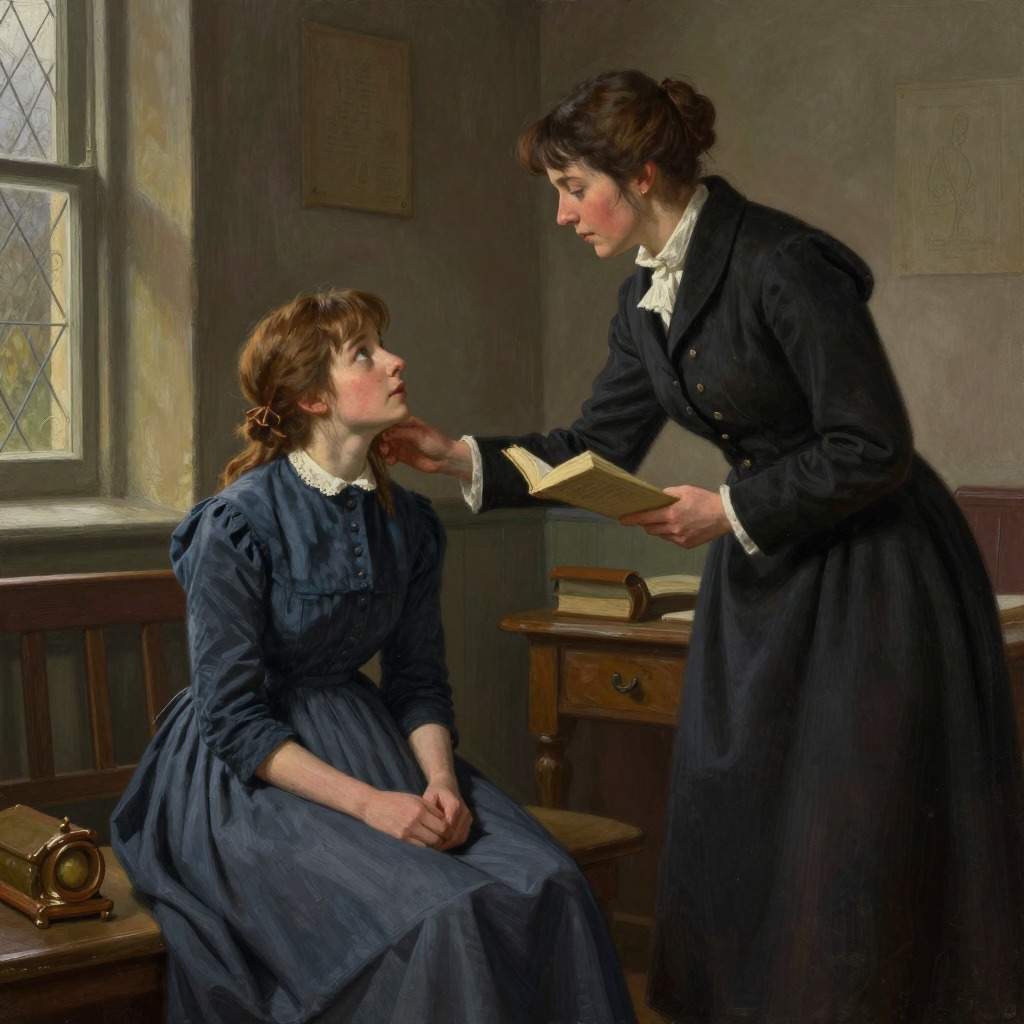
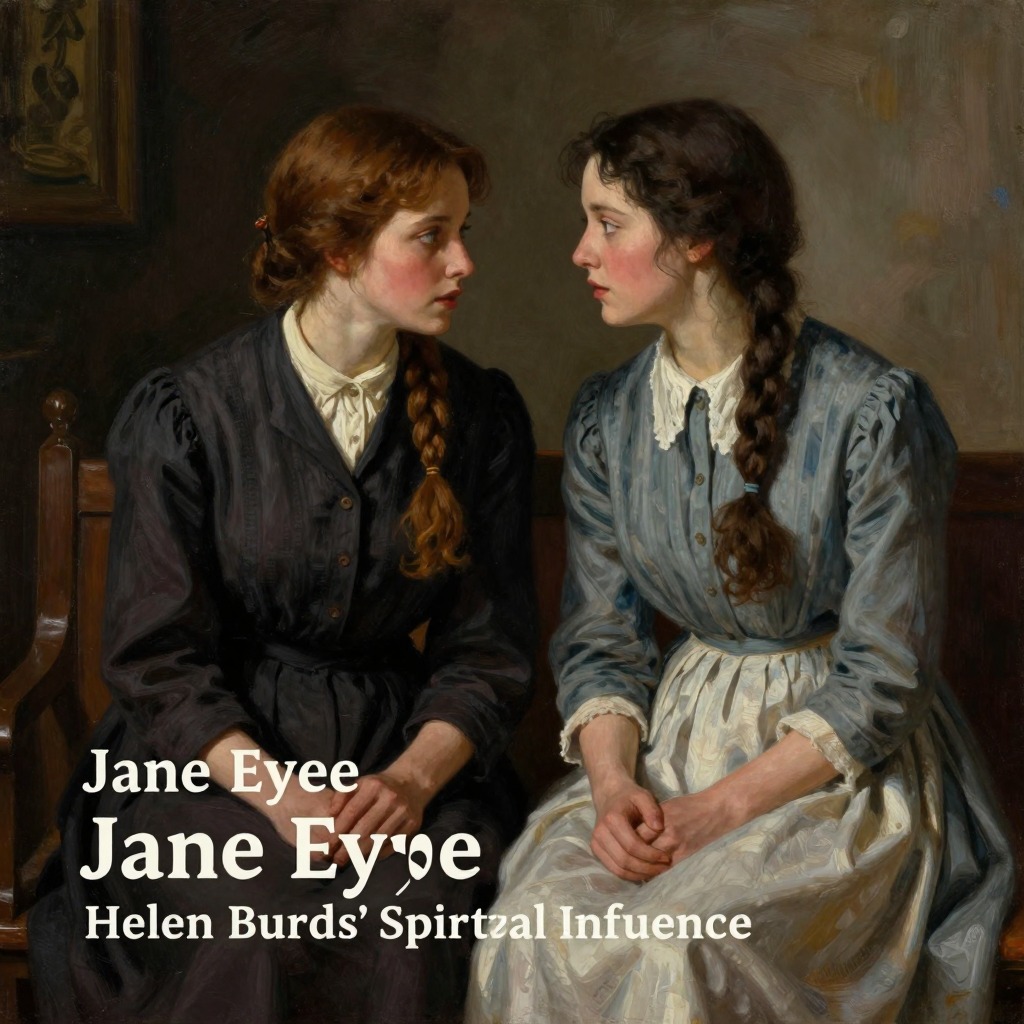
Helen Burns, Jane Eyre's first close friend at Lowood, is already marked by consumption when Jane meets her. The disease manifests in her persistent cough, which Jane notices during their evening conversations by the fire. Helen's cough is described as "short" and is accompanied by a labored breathing that signals the progressive damage to her lungs. Miss Temple, the superintendent, monitors Helen's condition with evident concern, taking her hand, examining her pulse, and sighing low after doing so. Helen is removed from the general dormitory and placed in Miss Temple's own room, a sign that her illness has advanced beyond the point where she can be cared for among the other girls. Jane, in her ignorance, initially misunderstands the nature of the disease, believing consumption to be "something mild, which time and care would be sure to alleviate." The narrative corrects this misapprehension when the surgeon, Mr. Bates, is summoned late one evening and pronounces that Helen "will not be here long." Jane, hearing this, realizes with a shock that Helen is dying. The final scene of Helen's life takes place in Miss Temple's room, where Jane creeps to her bedside at night. Helen's forehead is cold, her cheek and hand are cold and thin, yet she speaks with calm certainty about her impending death, describing it as a gentle, gradual process that causes no pain. She dies in the night, and Jane wakes to find herself in the nurse's arms, having slept with her face against Helen's shoulder and her arms around her neck. Helen's grave in Brocklebridge churchyard is marked, fifteen years later, by a grey marble tablet inscribed with her name and the word "Resurgam"—"I shall rise again."
Consumption as a Consequence of Institutional Neglect
Helen's consumption is not presented as an isolated tragedy but as a direct outcome of the conditions at Lowood. The school's regime of semi-starvation, inadequate clothing, and exposure to cold—Jane recalls the chilblains, the frozen water in the pitchers, the insufficient food—predisposes the pupils to infection. When typhus fever breaks out, forty-five of the eighty girls fall ill, and consumption claims Helen separately, as her complaint is distinguished from the epidemic. The narrative makes clear that the physical hardships of Lowood—the "scanty supply of food," the "insufficient" clothing, the long walks to church in bitter wind—create a population vulnerable to disease. Helen's death thus serves as an indictment of Mr. Brocklehurst's regime, which starves the body while claiming to save the soul.
Thematic Significance: Death as Transition
Helen's consumption is the vehicle for the novel's most explicit statement of Christian faith in an afterlife. On her deathbed, Helen tells Jane that she is "going to God," that she has "faith" in a future state, and that she will "come to the same region of happiness." Her disease, by removing her from a world where she suffers continual humiliation at the hands of Miss Scatcherd, becomes a release. Helen herself says that by dying young she will "escape great sufferings," as she lacks the qualities to make her way in the world. The consumption thus enables a death that is not tragic in Helen's own eyes but triumphant: it is a gentle, gradual passage to a home where she will be received by a "mighty, universal Parent." Jane, who witnesses this death, carries Helen's doctrine of endurance and her faith in the equality of disembodied souls into her own later trials, most notably when she prays for guidance before leaving Thornfield and when she refuses St. John Rivers's proposal of a loveless marriage. The disease, in this reading, is the instrument that transforms Helen from a suffering schoolgirl into a spiritual touchstone for the rest of Jane's life.